"30/360 US" - Monthly Interest Frequency
Is there any example of using the "30/360 US" Day Count Rules on monthly Interest Frequency?
✍: FYIcenter.com
 There is one example from the
"Don‘t Let Accounting Practices Hamstring Your Portfolio"
presentation slides.
There is one example from the
"Don‘t Let Accounting Practices Hamstring Your Portfolio"
presentation slides.
This example uses the following Citigroup bond:
Issuer:                 Citigroup
Interest rate:          3.8%
Interest frequency:     Monthly, Paid on EOM
Day Count Convention:   30/360 US
Term:                   13 Months
  Start Date:           2022-06-30
  Maturity Date:        2023-07-30
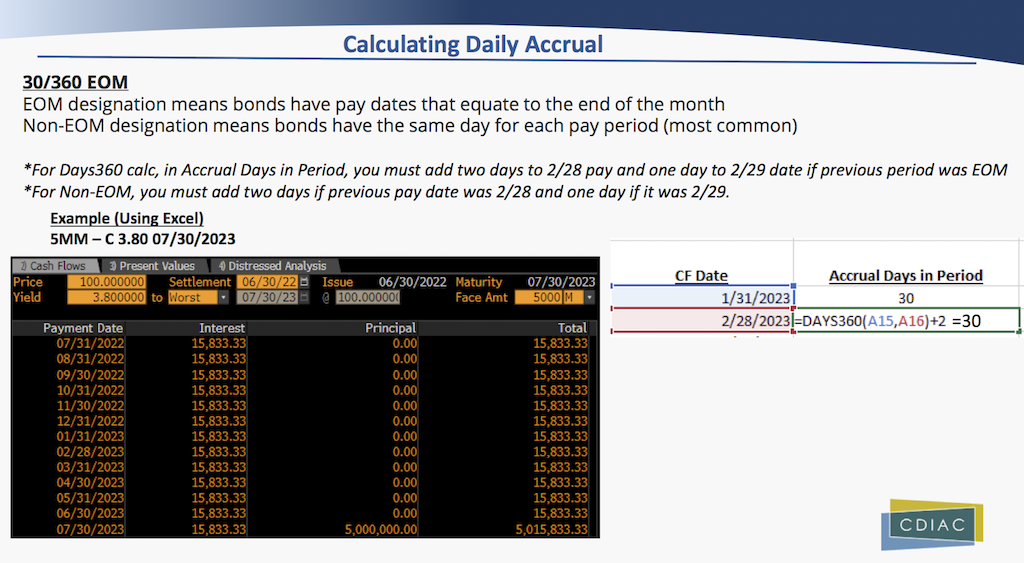
To count days in each Accrual Period, it uses the Microsoft Excel function DAYS360() with the following 2 adjustments, which are not so easy to understand:
- For Days360 calc, in Accrual Days in Period, you must add two days to 2/28 pay and one day to 2/29 date if previous period was EOM
- For Non-EOM, you must add two days if previous pay date was 2/28 and one day if it was 2/29.
The table below shows you how monthly interests of %5,000,000.00 Principal are calculated in this example:
Interest rate: 3.8%
Principal:   $5,000,000.00
Interest Rate  3.80%
Principal   5000000.00

T1          T2          DAYS360()  Adj.  Interest
----------  ----------  ---------  ----  --------
2022-06-30  2022-07-31         30        15833.33
2022-07-31  2022-08-31         30        15833.33
2022-08-31  2022-09-30         30        15833.33
2022-09-30  2022-10-31         30        15833.33
2022-10-31  2022-11-30         30        15833.33
2022-11-30  2022-12-31         30        15833.33
2022-12-31  2023-01-31         30        15833.33
2023-01-31  2023-02-28         28     2  15833.33
2023-02-28  2023-03-31         30        15833.33
2023-03-31  2023-04-30         30        15833.33
2023-04-30  2023-05-31         30        15833.33
2023-05-31  2023-06-30         30        15833.33
2023-06-30  2023-07-30         30        15833.33
The picture below shows you the original slide with the above example:
⇒ "30/360 US" - Variations of EOM Rules
⇐ "30/360 US" - EOM Period Examples
2026-02-09, ∼449🔥, 0💬
Related Topics:

